PHILADELPHIA — The Flyers have spent much of the season searching for consistency, learning hard lessons, and trying to establish an identity that can make them a successful team—like they were last season.
But sometimes, the biggest signs of improvement aren’t necessarily found in a perfect 60-minute performance. They’re found in how a team responds when things go wrong.
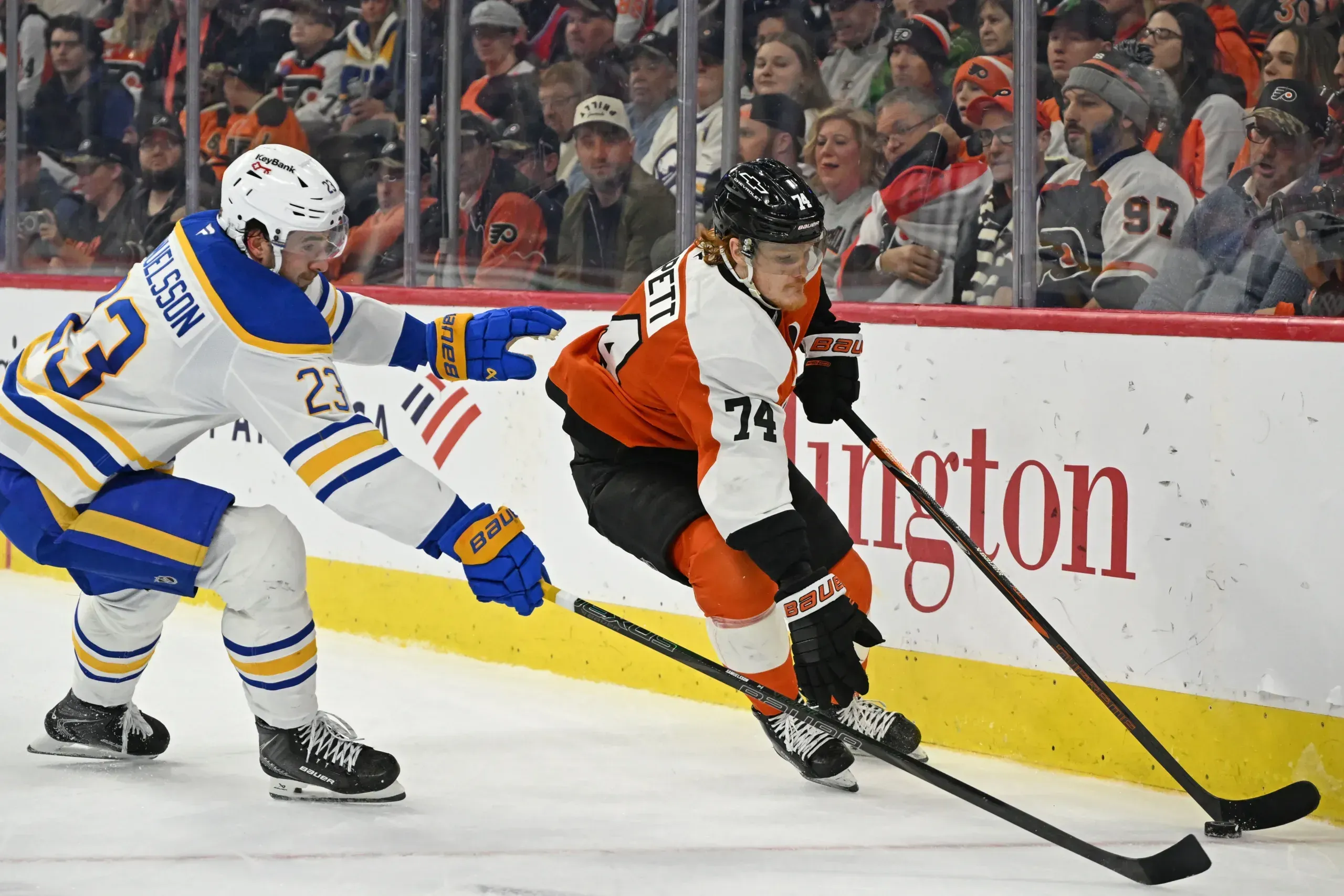
That was on display in Tuesday’s 4-3 win over the Buffalo Sabres.
The Flyers didn’t get off to the start they wanted, turning in another disappointing opening period that left them chasing the game.
But instead of letting a slow start dictate the rest of the night, they responded with a much better effort over the final two periods, finding a way to turn things around and secure a needed win.
More importantly, the response reflected something the Flyers have been trying to develop: accountability.
Jamie Drysdale didn’t sugarcoat what happened in the opening period.
“Yeah, just completely unacceptable. Bad brand of hockey on all fronts. Waller (goalie Joseph Woll) kept us in it and (we) gave up way too many chances. I mean, they came out flying and we didn’t, and we were able to turn around,” Drysdale said.
That kind of assessment is important for a team that has struggled to put together consistent performances. The Flyers have had their share of games this season where one bad period has snowballed into something much worse. They’ve blown leads, struggled to respond to adversity, and allowed mistakes to carry over from one shift to the next.
This time, they owned their disappointing start and did something about it.
Rick Tocchet acknowledged that the first period wasn’t good enough, but also gave credit to the players for taking ownership of the response.
“I just said we need some pride here, and I just let them take over. I got to give them credit, leadership group,” Tocchet explained. “So it had nothing to do with me. I was just saying, you can’t come in after first yelling all the time you’ll be out of the league. That’s where the players have to take over, which they did tonight, and they have been lately too.”
That is perhaps one of the more encouraging developments for the Flyers.
Accountability can’t always come from the coaching staff. Players have to recognize when their effort isn’t good enough, hold themselves responsible, and demand more from one another. A team that constantly needs its coach to provide an emotional wake-up call will not find consistent success.
Drysdale touched on that exact point when discussing how the Flyers can move forward amid the energy and outside attention surrounding the team.
“I think first of all we’ve got to stick together. There’s a lot of energy around the team and whatnot, and you know everyone sees it. So I think that’s part of it, as well as just realizing you have to take accountability yourself and play better yourself before you, you know, kind of give it to other people or rely on other people to just look in the mirror kind of thing,” Drysdale said.
It’s a message that carries weight, particularly for a younger group still learning what it takes to win consistently in the NHL.
There has been plenty of attention surrounding the Flyers, their struggles, and the questions about where the team is headed. But the best way to quiet that noise is through improved performances on the ice, winning sure would help that.
The Flyers have also begun showing signs of improvement in some of the areas that have hurt them earlier in the season.
Tocchet pointed to the team’s more aggressive approach in third periods, noting that they has started playing on their toes rather than sitting back and allowing opponents to dictate the action.
Still, the Flyers aren’t pretending they’ve figured everything out.
“We’ve had to learn the hard way, you know, the kind of the brand we need to play to win games. We played two periods of it tonight. If we want to be a successful team consistently, it’s got to be 60 minutes, and we’ve all seen that we can do it,” Drysdale said. “So I think starting better is going to be a big point of emphasis, and just coming ready to play, and with just different attitude mindset, it should be in a good spot.”
That’s the next challenge. Responding after a poor period is encouraging, but consistently avoiding those poor periods is what separates good teams from those still trying to find their way.
There were also plenty of examples of the little details beginning to translate into meaningful results. Tocchet highlighted Noah Cates winning a battle along the boards before Owen Tippett’s goal and Drysdale keeping a puck alive at the point to help create the scoring opportunity.
Those aren’t necessarily the plays that make highlight reels, but they’re the foundation of the identity Tocchet wants his team to establish.
“Small things win hockey games,” Tocchet said. “It’s the little things that you add up create the big moments. Everybody wants the big ones, which is great. I mean, we talk about big moments, but how do you get to big moments? It could be three little small plays for the big moment.”
Owen Tippett has also noticed the gradual improvement in Philadelphia’s overall game.
“I think the last little bit we’ve been as a team kind of generating more, playing more consistent throughout games, getting more chances, and being in games to the end. Those are the games that you gotta kind of be comfortable winning,” Tippett said.
That last point is particularly important. The Flyers have to become comfortable winning close games, protecting leads, and finding ways to make the necessary plays when the outcome is still in question.
Tuesday’s win wasn’t a perfect performance, and the opening period showed there is still plenty of work to do. But it offered another example of a team beginning to respond differently when faced with adversity.
The Flyers aren’t going to fix every problem overnight. They’re going to have bad periods, difficult stretches, and games where things don’t go according to plan. The difference will be whether they allow those moments to define them or take responsibility for them.
For a team that has spent much of the season searching for its identity, that response might be just as important as the two points in the standings.
The improvement is still a work in progress, but the Flyers are beginning to show that they understand what needs to change. Now they have to prove they can bring that same accountability and urgency from the opening puck drop through the final horn.
