
PHILADELPHIA – The Philadelphia Eagles entered the 2026 season with expectations of competing for another Super Bowl.
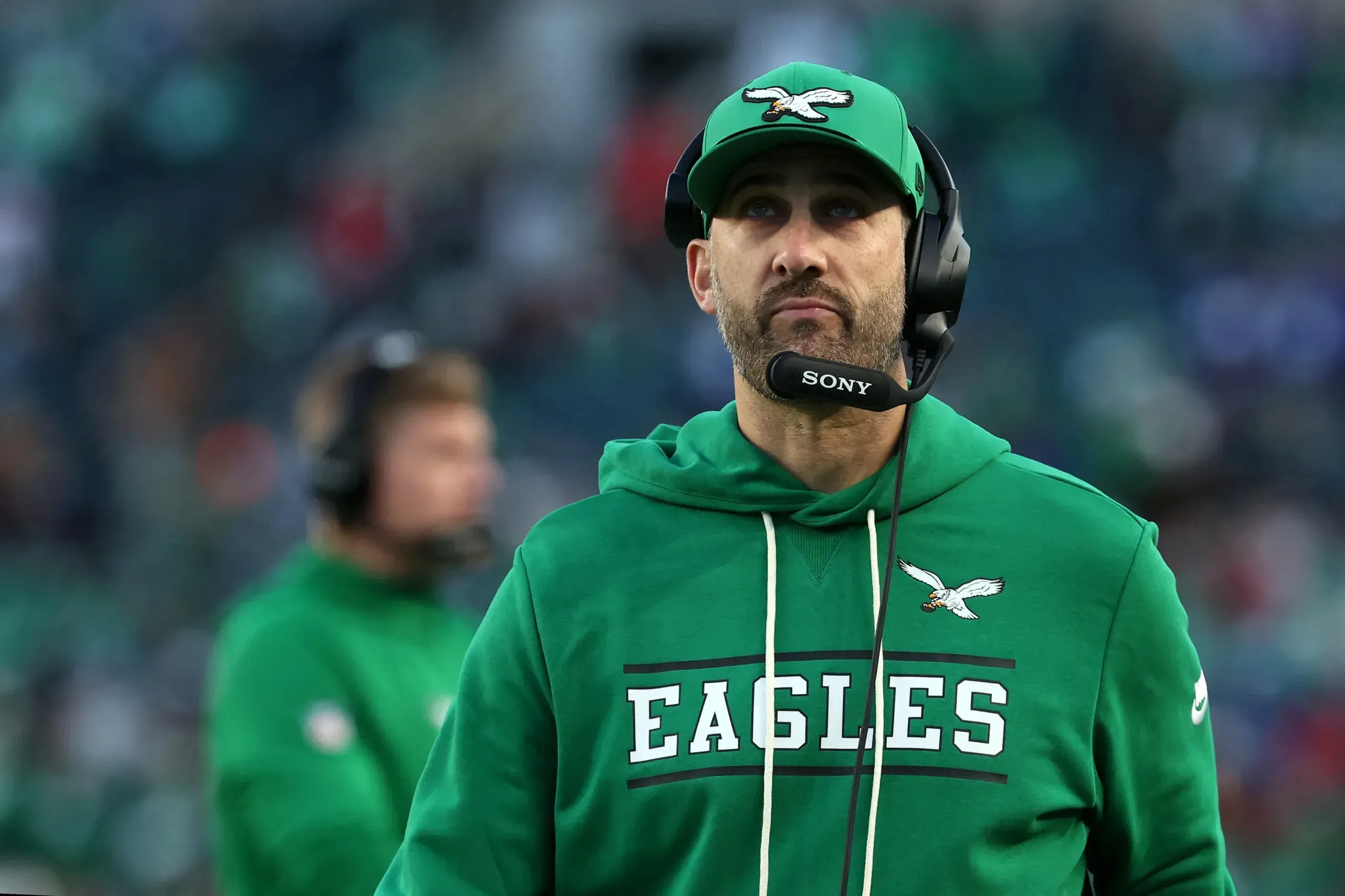
Instead, they’re facing a much different reality, one that has put head coach Nick Sirianni’s future under extreme scrutiny.
The Eagles’ 19-11 loss to the New York Giants extended their losing streak to seven games, the longest since 2012, while marking their first home loss to the Giants since 2013.
Now, Howie Roseman and Jeffrey Lurie face an increasingly difficult question to answer.
How much of this disappointing season is attributable to circumstances outside Sirianni’s control, and how much responsibility falls on the head coach?
There are plenty of reasons to question Sirianni’s performance, particularly the team’s inability to correct recurring problems.
Sunday’s offensive performance ranked the fifth-worst outing in terms of success rate among 262 offensive performances this season.
The Eagles are averaging 260.2 yards per game, ranking last in the NFL and 16.4 points per game, the third-lowest average in the league.
The same mistakes continue to surface without noticeable improvement.
Take the sack of Joe Milton by Arvell Reese, who came flying off the left edge untouched. It’s another example of the protection problems that have plagued the offensive line:
The Eagles lead the league in unblocked pressures. Milton — a mobile quarterback who had not been sacked in his first 58 dropbacks in his small sample size as a pro — was sacked seven times in the loss.
“Yeah, I’m not going to get into who’s at fault or anything like that,” Sirianni said.
“Anytime there’s a guy that’s free in that situation, we’ve got to look at ourselves as coaches first and say, ‘Did we do everything we could do to help them?’ … Whether it’s on us as coaches or whether it’s an execution thing, it’s still on us as coaches. It starts with me and it’s always on me; every product that’s on that field is my responsibility.”
Sirianni has spent nearly two months taking responsibility for the team’s offensive struggles. But accepting responsibility and finding solutions are two different things.
The new offensive scheme, featuring wide-zone runs and a more creative passing attack, hasn’t translated from Training Camp to the regular season.
“We believe in the system that we just put anyone in and we can get it going,” Jordan Mailata said.
“For the most part, especially during OTAs and camp, that was achievable. We were doing that, especially in the joint camp with the Patriots we felt really good. But when we come to the games, it’s not carrying over.”
If the system was producing results during the offseason but hasn’t translated to meaningful games, Roseman and Lurie must determine why.
There’s also the question of how much responsibility belongs to first-year offensive coordinator Sean Mannion.
Roseman played a significant role alongside Sirianni in the search that ultimately led to hiring Mannion, who had just two years of NFL coaching experience.
Yet, this is another season in which Sirianni has entrusted the offense to an inexperienced playcaller. That raises questions about his ability to identify the right offensive leadership and whether he should take a more active role in directing the offense.
“My job is to coach the players and to coach the coaches, and anything I can do to help this team win games, we’ll do,” Sirianni said when asked about potential changes to his staff.
“Everything can always be on the table, but I don’t think you change just to change because that’s what your record says that — you’ve got to look at what’s really real and not react to anything else. Again, I just don’t believe you just change just to change. If you have a strong reason to do things in anything, not just change, but in anything and you’re convicted on it, that’s how we’ll go about our business.”
Viewed more as a CEO-style coach, if he can’t address and improve the team’s schematic shortcomings, questions about his ability to lead the organization become increasingly difficult to ignore.
Ultimately, the Eagles must determine whether the offensive struggles are a product of Mannion’s inexperience, extremely poor offensive play, Sirianni’s approach to overseeing the offense or a combination of all the factors.
Sirianni’s résumé deserves consideration. He’s led the Eagles to multiple Super Bowl appearances and established himself as one of the most successful coaches in franchise history.
That track record should earn him some benefit of the doubt, but past success doesn’t guarantee another opportunity if the organization believes the team is no longer progressing.
Over their last 17 games, the Eagles are a 5-12 football team.
At the same time, the circumstances surrounding this season complicate the evaluation.
The Eagles have dealt with significant injuries to some of their most important offensive players. They lost franchise quarterback Jalen Hurts, Saquon Barkley has been banged up and DeVonta Smith hasn’t played in three consecutive weeks because of a hamstring injury.
That’s three of the team’s most important offensive weapons.
The offensive line has also been disrupted and turned into one of the worst units in the NFL. Drew Kendall is in his first year starting at center and rookie right tackle Markel Bell is struggling to acclimate following the retirement of potential Hall of Famer Lane Johnson.
Those circumstances have dramatically altered the personnel available to Mannion and Sirianni, making it difficult to fairly evaluate the offensive system.
Sirianni isn’t responsible for every missed block, inaccurate pass or injury. But he is responsible for overseeing the coaching staff, establishing accountability and finding ways to adjust.
That’s the distinction Roseman and Lurie must consider.
A dramatic turnaround in the win column might be unrealistic given the injuries and challenges remaining on the schedule. The Eagles have two weeks to prepare for their next opponent, the Pittsburgh Steelers, giving the coaching staff an extra time to look in the mirror and attempt to at least show glimpses of improvement.
The bye week is welcomed by veteran offensive lineman Jordan Mailata.
“This bye week comes at a great time to really have self-reflection on what the hell we need to do. The direction we need to go and have a look at everything. The scheme, whatever the coaches decide,” Mailata said.
Historically, Lurie and the Eagles haven’t made a habit of firing head coaches during the season. When the bottom fell out in 2012 with Andy Reid and in 2020 with Doug Pederson, the two coaches saw the end of the season prior to Lurie making a change at head coach.
If that trend continues, Sirianni will have the final eight games to make his case.
He doesn’t necessarily need to turn the season around in the win column. But he does need to demonstrate that he and his coaching staff can fix the shortcomings they consistently identify, even if it takes longer than an impatient fan base would like.
How the Eagles respond over the next two weeks could ultimately determine whether Sirianni remains the right person to lead the organization.
